VPN access not working
Raised by Priya N. · Northline Health, Melbourne
Your service desk, your assets, and the reporting that proves it works — one record per request, and the routine work handled before it reaches a person.
Raised by Priya N. · Northline Health, Melbourne
Every request, one record, one timeline — from the first message to the resolved outcome.
The cost of a desk is not the licence. It is the people to run it, the people to staff it, and the routine work that eats the capacity you paid for.
A ticketing tool, a spreadsheet for assets, a wiki nobody updates, and an inbox holding it together. Each has a licence, an owner and its own truth. Nothing reconciles.
One data model: the request, the asset, the person and the deadline are the same record. The desk holds the truth, not the inbox.
It removes the routine, not the judgement. Every suggestion cites the record it came from, and nothing closes without a person.
From the moment it is raised to the report your leadership reads at month end. Choose a stage to see what the desk actually does at that point — this is the same flow the product view above is running.
One screen to ask, one queue to work, one record that holds the history.
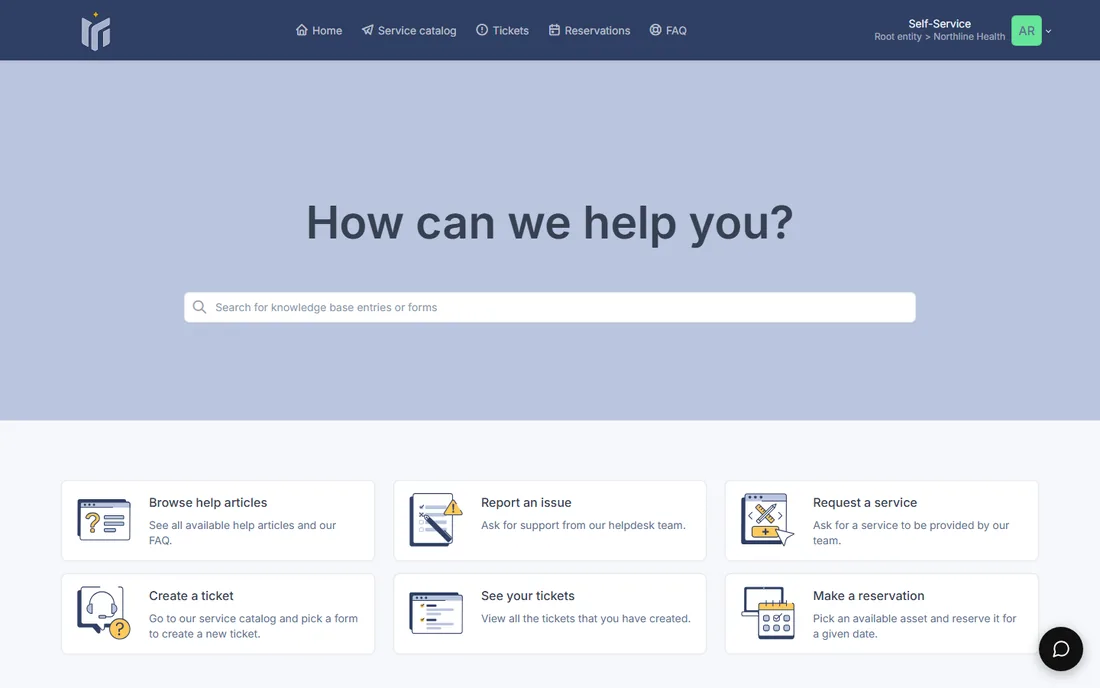
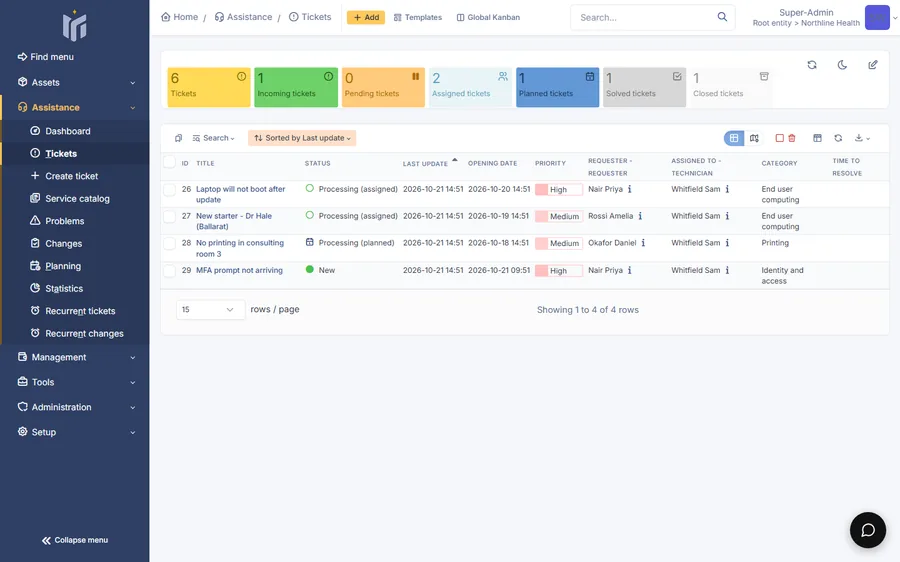
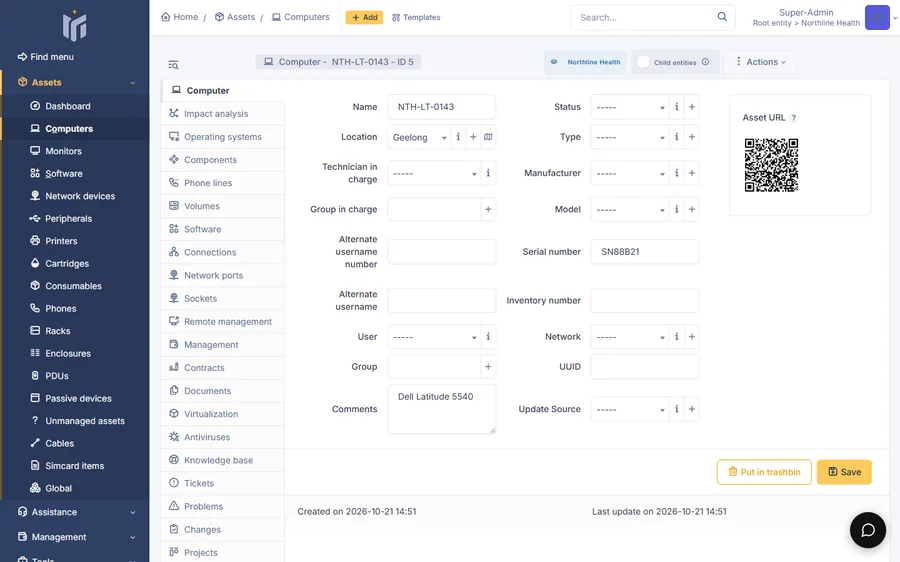
Screens from a demo workspace with sample records.
Usually two products bolted together. Here the ticket knows its asset, the asset knows its holder, and the report reads all of it.
No module keeps its own copy of the truth. That is the difference between recording work and being able to report on it.
Urgency, isolation, turnover, budget, audit. Open one for the situation, the walkthrough and what we need to start.
Your signed-in session resolves to one tenant, and the server answers only for that tenant. A value the browser supplies never decides whose data comes back.
Watch the wire that gets refused. We run this in every demo.
Our own product film: the problem, the desk, what runs underneath, and who is in charge when the assistant gets it wrong.
Product screens in the film are our own interface with sample records. Where a number appears, it belongs to a sample ticket rather than to a customer.
Not six subscriptions, and not six places to look when something is wrong.
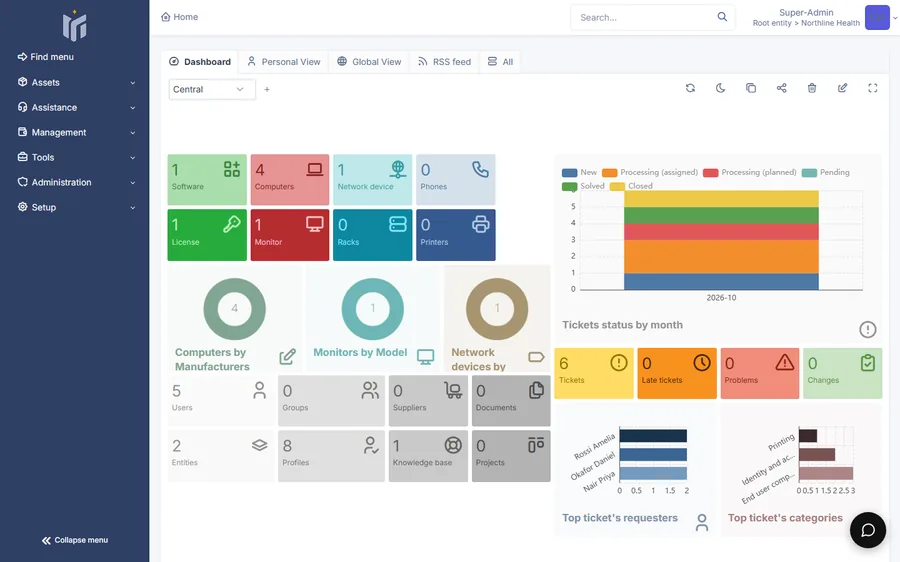
Incidents, requests, problems and changes on one queue, with service levels measured.
OpenEvery device, licence and warranty in one register, purchase to retirement.
OpenPriorities, categories and drafted replies, grounded in your records — not the internet.
OpenVersioned articles, written from the tickets that solved the problem.
OpenRules, approvals and scheduled work that behave the same on a Friday as a Tuesday.
OpenDashboards, board packs per site, and a full export whenever you want it.
OpenSix questions about your desk. It returns the monthly support hours, the person-equivalent, the annual cost — and what the routine share would be worth if it were absorbed.
It is arithmetic on your numbers with one visible assumption you can move. It is not a quote, and it is not a claim about results we have had elsewhere.
Example inputs: 120 people, 260 requests a month, 42 minutes average handling, $65 an hour. Your own answers replace them.
How the platform works, what happens at onboarding, and what is written into your agreement. Bring any of it to a demo and test it.
The Managed Desk · Melbourne, Australia. Australian-owned and operated, on infrastructure inside the country.
Hosted in Australia. Your records do not leave the country for hosting.
Service management, asset management, knowledge, automation and reporting share one data model. There is no middleware to reconcile.
No lock-in contract, and full export of your records in an open format at any time.